Want to photograph the Red Sea’s rarest marine life? Skip the common clownfish. Backed by 10+ years of dive-mapping experience, the expert team at Hurghada Secrets presents this fast guide on how, when, and where to capture Hurghada’s most elusive underwater targets.
The Photographer’s Checklist: Top 6 Elusive Species
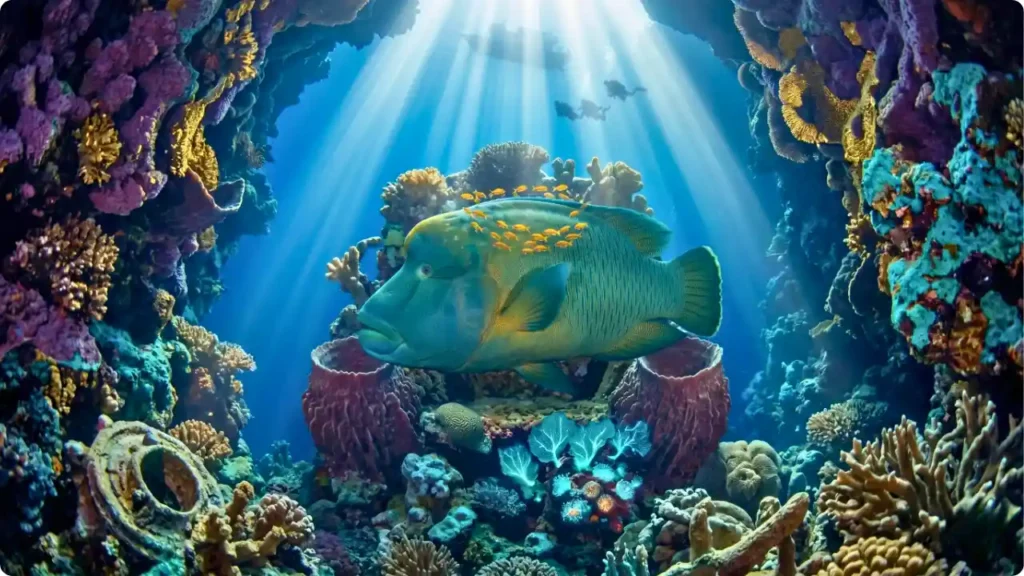
1. The Napoleon Wrasse (Humphead Wrasse)
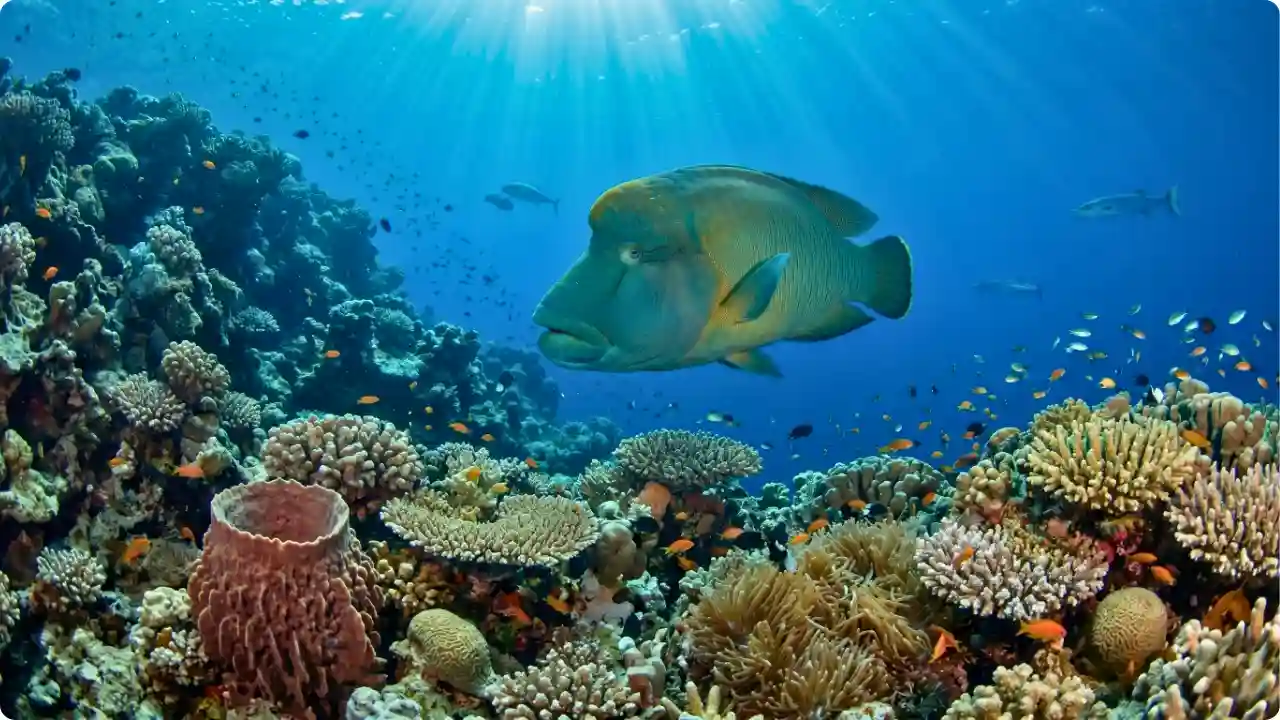
- The Target: A gentle reef giant growing up to two meters with an unmistakable prominent forehead.
- The Shot: Approach slowly to avoid startling them. Use a wide-angle lens to capture their massive scale against the deep blue background.
- Where to Find: They patrol deep drop-offs. Frequently spotted during excursions near Small Giftun Island and Umm Gamar. If you plan to land on these island shores for beach photography, read our orange bay vs paradise island hurghada review.
2. The Spanish Dancer (Hexabranchus sanguineus)

- The Target: The ultimate Red Sea macro prize—a large, flamboyant nudibranch that swims with a flamenco-like motion.
- The Shot: Use a dedicated macro setup and external strobes to pull out its vivid, blood-red color and delicate gills.
- Where to Find: Strictly nocturnal. Book a specialized night dive around the coral walls of Gota Abu Ramada.
3. The Blue-Spotted Ribbontail Ray

- The Target: Striking but highly skittish rays resting on the ocean floor.
- The Shot: Drop low to the sand for a dramatic composition contrasting neon blue spots against pale sand. Never hover directly above them.
- Where to Find: Under coral overhangs or on sandy plateaus at Sha’ab Sabrina. *(Note: Calm autumn days offer the best seabed visibility. Check our detailed best time to visit hurghada weather guide).*
4. The Giant Moray Eel

- The Target: Large predators that constantly gape their jaws to breathe, offering excellent portrait opportunities.
- The Shot: Focus tightly on the eyes and skin texture. Watch for symbiotic cleaner shrimp inside their mouths. Avoid sudden strobe flashes to prevent them from retreating.
- Where to Find: Tucked into deep rocky crevices across Abu Galawa.
5. The Intelligent Octopus
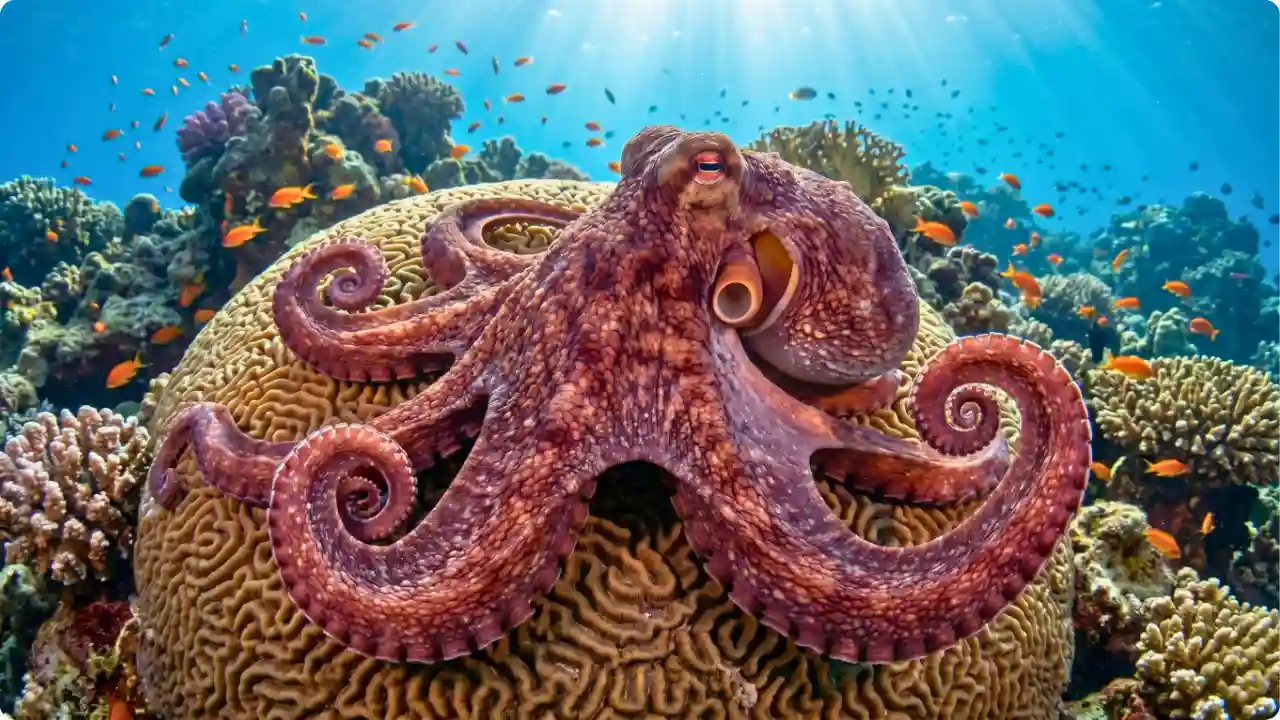
- The Target: Masters of disguise that change color and texture in milliseconds to blend with the reef.
- The Shot: Video is best to capture the camouflage in action. For stills, wait until they elevate or stretch tentacles across the coral.
- Where to Find: Look for unnatural physical shapes rather than colors. Frequently spotted hiding in plain sight at Fanous West.
6. The Titan Triggerfish
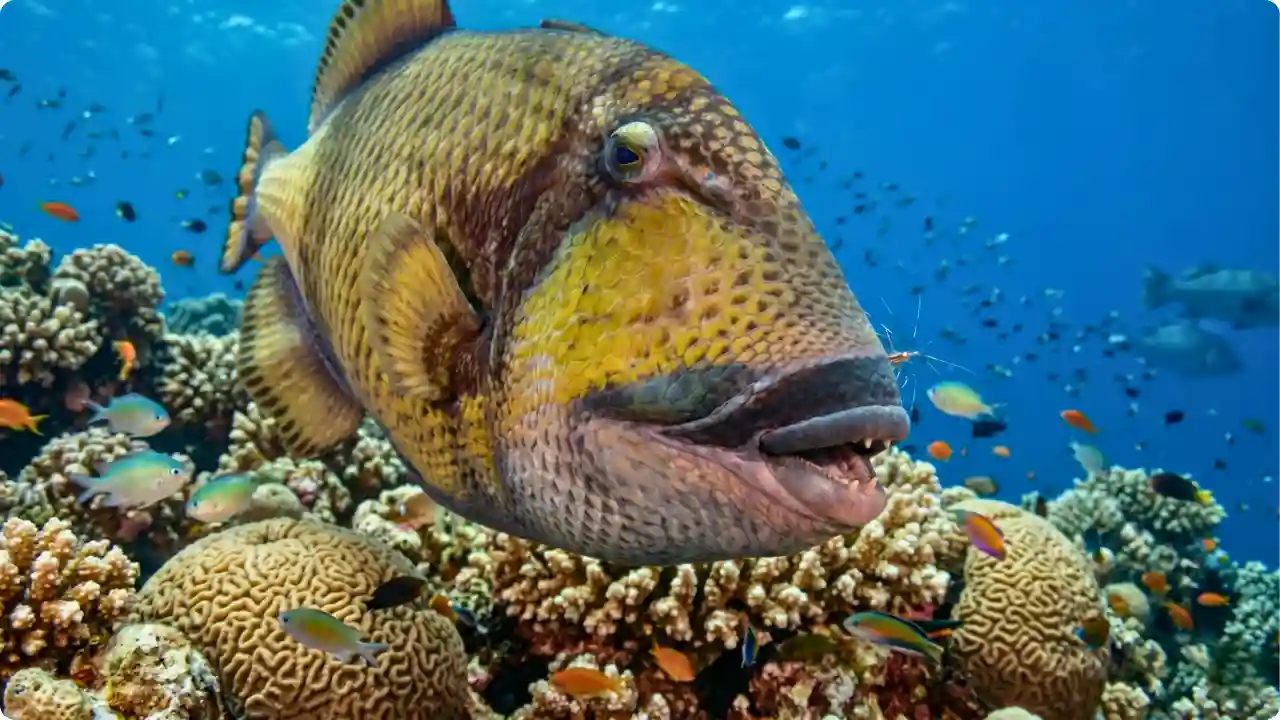
- The Target: Large, heavily patterned fish known for fierce territorial behavior.
- The Shot: Maintain a safe distance. Use their independently moving eyes and sharp markings for dramatic, tight portraits.
- Where to Find: Guarding sandy crater nests from late spring to summer. If confronted, swim away horizontally—their defensive zone is an upward cone rising to the surface.
Camera Settings for Red Sea Blue Hues
- Manual White Balance: Recalibrate frequently as depth changes, or use a high-quality red filter to restore warm tones lost in blue water.
- Reduce Backscatter: Position strobes wide and angle them slightly outward to avoid lighting up abundant plankton particles directly in front of the lens.
- Shoot Upwards: Position yourself below the subject and shoot toward the sun to isolate the marine life from cluttered reef backgrounds.
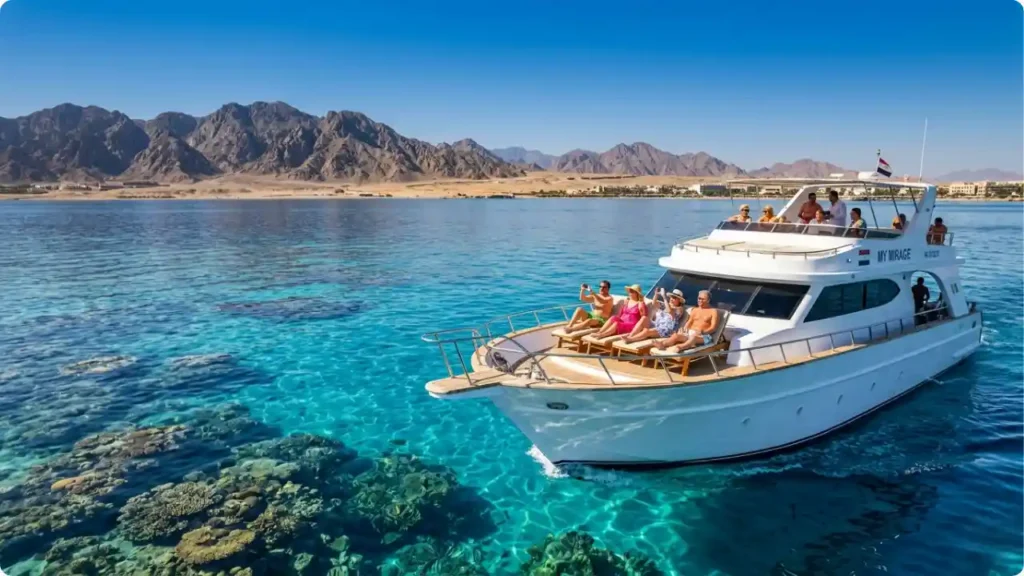
Ready to capture your masterpiece? Explore our specialized Red Sea Boat Trips and let our expert guides put you exactly where the action happens.